What follows below is the story of how our founder came to realise that more work was urgently needed to support people with PCOS.
I was unwell for over seven years before I finally received a diagnosis and the support I needed, and it has taken me nearly fourteen years to put my life back together. The strange part is that I did not have a rare, or unusual disease, in fact, I had a condition that affects around 1 in 10 women globally; but the lack of support and education in the medical community meant that instead of getting the help I needed, I was actually psychologically sectioned for 8 weeks. This is my story.
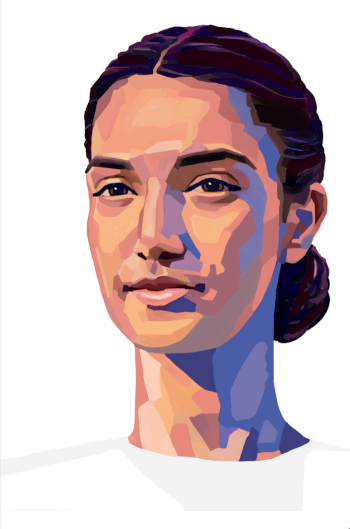
Before my symptoms started, I think you would have described me as an extrovert. There was never an evening that I did not have friends or family over for dinner, and my flat was always the centre of our social events. I played hard, but I worked hard too and I was awarded an MSc with Distinction from London School of Economics. I loved fashion, with a particular weakness for shoes, and I prided myself on my appearance, always making sure I looked good for any event, however large or small.
One day as I carried out my usual meticulous hair and make-up routine, I noticed a few hairs starting to grow on my chin – I thought nothing of it, but this tiny event actually signaled the start of the worst years of my life. I started to become fatigued very easily, and the low energy levels got so bad I would be in my bed for days at a time. This compounded the depression I was starting to feel and my self-esteem was badly affected.
Eventually, I took myself to my GP who was less than helpful! In fact, he insinuated I should pull my finger out and get on with it! Then I saw a herbalist, who was even less useful and spent his time hitting on me, a counselor, several masseurs, a kinesiologist, and two nutritionists. Finally, I went back to my GP who consented to running blood tests but told me they were normal. I argued that the results clearly showed my testosterone was outside of range, and he simply wrote ‘raised’ on his notes and sent me on my way without treatment.
After a few years of this cycle, my symptoms were becoming more pronounced. I developed excruciatingly painful acne, I missed 3 to 6 months of my ovulation cycle, and the hair growth on my face had reached the level of ‘beard’. I was miserable, gaining weight, and suddenly my life came to a complete standstill.
I was no longer the social, happy, woman I had been. I had been working towards getting a Ph.D. and planning to teach at university. Now, instead of charging forward to the top ranks of academia, I was struggling to leave my house. Long commutes to work were a struggle, and by the time I made it there, I was so fatigued, that I couldn’t focus. I had papers to write, analysis to conduct, and I had no energy or motivation to achieve them. So I quit my job.
I became increasingly isolated. I had received so much confusing information from the doctors and specialists that trying to abide by it all left me with a terrible diet. The lethargy and fatigue made it even worse. Now, instead of creating 3-course dinner parties for 10 people, I could barely manage to put bread in the toaster.
I saw more and more ‘experts’ to no avail and finally went back to my GP. He noted that I had an acute case of hirsutism and after finally sending for tests, I was diagnosed with Polycystic Ovary Syndrome against the very strict Rotterdam criteria. For nearly eight years my symptoms did not fit within this strict criteria, despite having what are considered to be classic PCOS symptoms. Even with a confirmed diagnosis, and being told my symptoms were indeed acute, my GP told me that there was nothing he could do for me.
I went home and went to bed. My finances were dwindling, my career was gone, and no one could help me. I stayed in bed for days without food. My parents moved in to try and help me, bringing food to my room which I would leave uneaten. By this stage, I had severe pain in my pelvis, the hair growth was getting worse, and the stress and fatigue were quickly building to psychosis. They were so worried about my physical and mental health that they contacted my GP who had me sectioned.
I was removed from my house by police officers and mental health staff and taken to a secure facility for 66 days…all because my hormones were unbalanced. In the psychiatric unit, I wore my funnel coat every day for 8 weeks to cover the beard as even then I didn’t have the courage to tell anyone for fear of being stigmatised.
When I was released I got in touch with one of my dear friends, Anji. She developed an App to try and help me on my journey to recovery. The app, which became the first incarnation of PCOS Buddy, supported me 24 hours a day to make the right choices with food, exercise, and managing my symptoms. After using the app consistently for 3 years, I was told by her GP that I am ‘symptom recovered’ from PCOS.
Overall, it took me 14 years to overcome PCOS, and for the majority of that time, I did not even know what I was trying to overcome. For close to eight years, I lived with the very difficult symptoms but with no diagnosis or treatment. I lived in a way where I was completely isolated and frightened by my own body. It has been just over six years since I was diagnosed with PCOS, and following some very hard work on my mental health, I started to re-structure my life.
During that period of 14 years, I received no support from the medical establishment to address my symptoms. I sought advice from alternative practitioners and did not feel heard. PCOS is a condition that can be overcome, but it took me three years to do this with huge effort on a daily basis. Now, I am back to work, back to being confident, and I have found a partner to spend my life with. I had to turn my life from hopeless to hopeful and it’s been an incredible journey.
The team has now created the mobile app, PCOS Buddy, based on the paper app. You can install the app for Android or Apple devices.